When a hydraulic system starts losing pressure, most maintenance teams first check the pump, valve block, cylinder seals or filtration system. That is normal because these are the larger and more visible parts of the hydraulic circuit.
But in many real cases, the problem starts from a much smaller point.
A fitting that has developed a minor leak. A thread that does not match the original standard. A tube connection that has been exposed to vibration for thousands of working hours. These problems usually begin slowly and remain unnoticed until the machine starts losing efficiency.
This is why hydraulic fittings should never be treated as ordinary spare parts. In a high pressure hydraulic system, every connection point affects system reliability, oil flow, pressure stability and maintenance cost.
For industries looking for dependable sourcing, working with a trusted Hydraulic Fittings Manufacturer in Chennai helps reduce uncertainty because the buyer can discuss pressure range, material grade, thread standard and application requirement before selecting the product.
Hydraulic Failures Usually Start Small
Hydraulic failures are not always sudden. In most industrial systems, failure develops gradually. Before a major breakdown happens, the system usually shows signs such as oil marks near fittings, slight pressure drops, repeated tightening of connections or unusual heating in the hydraulic line.
Many teams clean the leakage area and continue operations, but that does not solve the actual issue. If the fitting is not gripping properly, or if the sealing surface is damaged, the same problem will return.
This is why connection quality matters as much as pump or valve quality.
Pressure Rating Should Not Be Ignored
One common mistake during procurement is selecting fittings only by size. A fitting may match the tube or hose size, but that does not mean it is suitable for the actual working pressure.
Hydraulic systems often face pressure spikes during machine startup, rapid actuator movement, emergency stopping or load changes. If the selected fitting is working too close to its maximum pressure rating, it may survive initially but fail early under repeated pressure cycling.
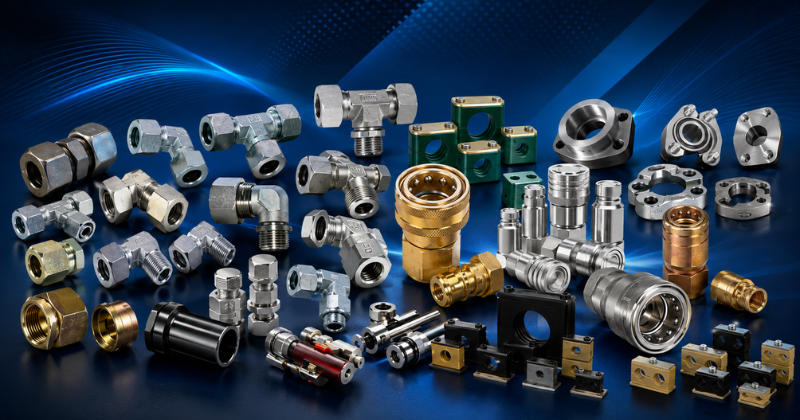
In high pressure tube based systems, properly selected Hydraulic Tube Fittings help maintain accurate connection geometry and stable sealing, especially where pressure fluctuation is common.
Engineers should check working pressure, peak pressure, temperature and vibration conditions before approving any fitting for installation.
Thread Standard Mismatch Can Create Leakage
Thread compatibility is another major reason behind hydraulic leakage. Many industrial machines use different thread standards depending on the country of origin. You may find BSP, NPT, JIC, metric and DIN type connections in different equipment.
If the replacement fitting is selected only by visual matching, leakage can start even when the fitting looks correct. This problem is common in imported machines where metric hydraulic fittings are used.
Many European hydraulic power units and industrial machines rely on DIN 2353 Hydraulic Fittings because they are designed for high pressure bite type tube connections. When the correct DIN fitting is used with proper tube preparation, the connection becomes more stable and reliable.
Using a near match fitting may save time during purchase, but it can damage threads, affect sealing and increase downtime later.
Vibration Slowly Damages Weak Connections
Hydraulic systems installed on construction machinery, presses, mobile equipment and industrial machines are constantly exposed to vibration. Even if the connection is tight during installation, vibration can slowly loosen poor quality fittings.
Once movement starts at the joint, leakage and tube damage usually follow.
This is where Hydraulic Ferrule Fittings are useful. The ferrule grips the tube mechanically and helps maintain connection strength under pressure and vibration.
In equipment where shock load and movement are regular, ferrule type fittings provide better holding stability compared to loose or poorly matched connections.
Material Selection Affects Service Life
Not every hydraulic fitting should be selected only by price. Carbon steel fittings are commonly used in general hydraulic applications because they offer strength and pressure handling at a practical cost.
But in environments where moisture, chemicals, outdoor exposure or corrosion are present, stainless steel fittings may be the better choice.
A fitting that starts corroding at the sealing surface can create leakage even if the original installation was correct. For high pressure hydraulic systems, material compatibility should be checked along with pressure rating and thread type.
Tube Preparation Is Just as Important as the Fitting
Many leakage problems are blamed on fittings, but the real issue can be poor tube preparation. If the tube is not cut square, if burrs are not removed properly, or if the tube wall thickness is not suitable, the fitting will not seal correctly.
Even a good fitting cannot compensate for poor tube preparation. This is why hydraulic tube systems require careful installation practice. The tube, fitting and ferrule must work together as one connection system.
Where frequent maintenance or fast equipment changeover is required, many hydraulic systems also use Hydraulic Quick Release Couplings to reduce disconnection time and avoid unnecessary oil loss during service work.
Why Supplier Selection Matters
Hydraulic fittings are not just catalogue items. A buyer may order the correct size and still receive a product that is not suitable for the pressure, material or thread requirement.
This is why technical discussion before purchase is important. A reliable hydraulic fittings supplier should understand operating pressure, tube size, wall thickness, thread standard, material compatibility, vibration conditions and application environment.
Buying only from generic trading sources may work for simple applications, but for industrial hydraulic systems, technical support and product consistency matter more.
Final Thoughts
Hydraulic fittings may look small compared to pumps, valves and cylinders, but they are responsible for holding the hydraulic circuit together. A weak fitting connection can cause leakage, pressure loss, contamination and unexpected machine stoppage.
Most hydraulic failures do not begin as major breakdowns. They start as small connection issues that are ignored during installation or procurement.
For industries that depend on hydraulic machinery, selecting the right fitting means checking more than just size and price. Pressure rating, thread standard, material quality, tube preparation and vibration resistance all need attention.
When these factors are handled properly, hydraulic systems run longer, leakage reduces and maintenance becomes more predictable.