Contact : +91-79045 61980 | Email: hydrofitengineers@gmail.com
Types of Hydraulic Fittings Used in Industrial Applications
In any hydraulic system, hydraulic fittings play a far more critical role than most people realize. In industrial environments—where systems run under high pressure, vibration, and continuous load—the wrong fitting choice is often the root cause of leaks, sudden failures, or repeated maintenance issues. Understanding the right hydraulic fitting types is not just a design decision; it’s a reliability and safety decision.
This article explains the most commonly used hydraulic fitting types in industrial applications, based on how systems actually operate on the shop floor—not textbook definitions.
Common Hydraulic Fitting Types Used in Industry
1. Hydraulic Pipe Fittings
Hydraulic pipe fittings are typically used in fixed pipeline installations where movement is minimal. You’ll commonly see them in power plants, steel mills, and large hydraulic piping networks.
Industry use case:
In cement plants and thermal power stations, pipe fittings are preferred for long, permanent hydraulic lines where rigidity and long service life are required.
Watch out:
Pipe fittings are not ideal for systems exposed to vibration. Over time, rigid connections can loosen or crack.
2. Hydraulic Tube Fittings
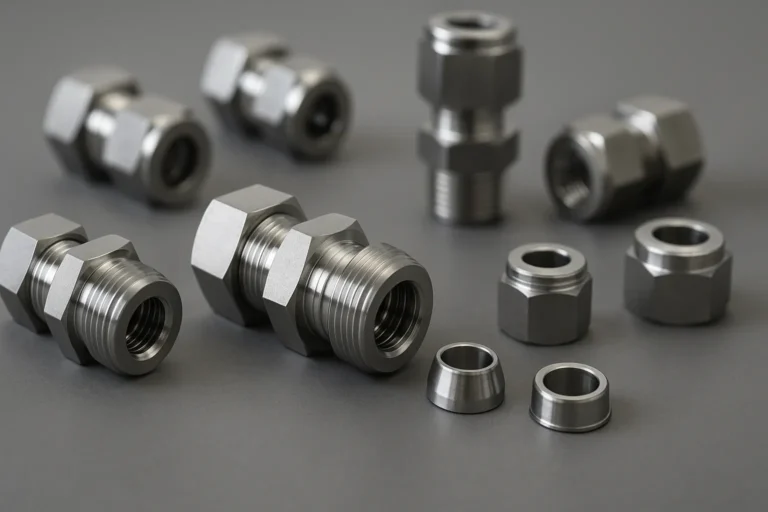
Hydraulic tube fittings are widely used in industrial machinery, presses, and OEM equipment. They provide better sealing and are easier to maintain compared to pipe fittings.
Industry use case:
Machine tool manufacturers often prefer tube fittings because they allow easy disassembly during maintenance or upgrades.
Selection advice:
Always ensure proper tube preparation (cutting, deburring, alignment). Poor installation is a common reason for leakage complaints.
3. Hydraulic Ferrule Fittings
Ferrule-based hydraulic fittings are used where leak-free performance is critical, especially in high-pressure or precision systems.
Industry use case:
Oil & gas skids, chemical plants, and instrumentation panels rely heavily on ferrule fittings to avoid micro-leaks.
Common mistake:
Over-tightening ferrule fittings. This damages the ferrule and leads to sealing failure instead of improving it.
4. Hydraulic Adapters and Connectors
Hydraulic connectors and adapters are essential when integrating components with different thread standards or during system modifications.
Industry use case:
Retrofit projects often depend on adapters to connect new components with existing hydraulic lines.
Safety tip:
Never mix incompatible thread types. Thread mismatch is a leading cause of sudden fitting blowouts.
Common Mistakes in Hydraulic Fittings Selection
- Choosing fittings based only on size, not pressure rating
- Ignoring vibration and thermal expansion
- Mixing metric, BSP, and NPT threads
- Reusing damaged or over-tightened fittings
Safety Tips for Industrial Hydraulic Systems
- Always depressurize the system before loosening fittings
- Inspect fittings regularly for wear or deformation
- Use fittings rated above the system’s maximum pressure
- Train maintenance staff on correct installation torque
Final Selection Advice
Selecting the right hydraulic fitting types requires understanding the application, not just the catalog. Pressure, movement, temperature, and maintenance frequency should all guide your choice.