Hydraulic Fittings Manufacturer in India
Hydraulic fittings are one of those parts people often notice only when a system starts leaking. On a good hydraulic line, they simply do their job quietly. They hold pressure, connect tubes and hoses, guide oil flow and keep the circuit stable even when the machine is working hard. In a press, power pack, excavator, steel plant machine or automotive fixture, the wrong fitting can create heat, pressure drop, oil loss and avoidable downtime.
That is why buying from an experienced hydraulic fittings manufacturer or hydraulic fittings supplier matters. A fitting is not selected only by thread size. The engineer has to check working pressure, tube outside diameter, hose size, sealing face, material, vibration level and service access. A fitting that looks correct on the table may still fail early if it is not right for the actual application.
Ferrule Fittings for Hydraulic Tubes
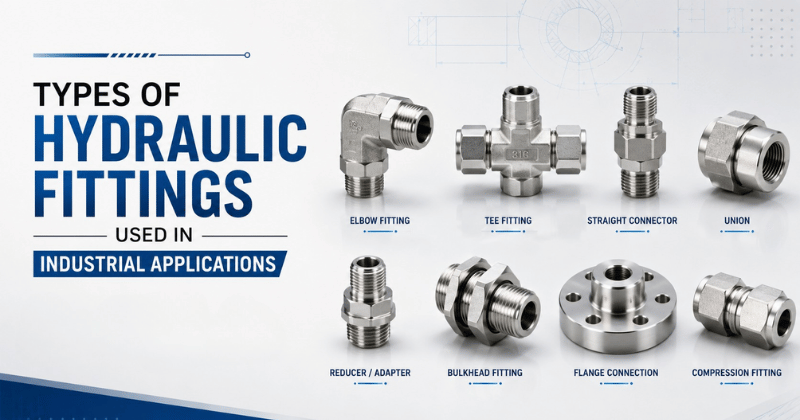
Ferrule fittings are widely used with rigid hydraulic tubes. You will find them in hydraulic power packs, machine tools, lubrication lines, testing units and industrial piping panels. The ferrule bites into the tube when the nut is tightened, creating a firm mechanical grip and a reliable seal.
The biggest advantage is that welding is not required. This keeps installation cleaner and makes future maintenance easier. When the tube is cut properly, deburred and inserted to the correct depth, hydraulic ferrule fittings can give long service life in pressure lines. They are especially useful where neat tube routing and repeatable assembly quality are important.
Threaded Hydraulic Pipe Fittings
Threaded fittings are used where pipes, valves, manifolds or equipment ports need a direct connection. BSP, NPT and metric threads are commonly seen in industrial hydraulic equipment. These threads may look similar to an untrained eye, but mixing them can damage the port and cause leakage.
Hydraulic pipe fittings are common in compact power units, maintenance rigs, presses and plant machinery. Proper tightening is important here. Too little torque can allow seepage, while too much torque can crack a port or distort the sealing area. This is one place where practical fitting knowledge saves both time and parts.
Hydraulic Hose Fittings
Hoses are used where the line has to move, bend or absorb vibration. A cylinder line on mobile equipment, for example, cannot always be done with rigid tubing. Hydraulic hose fittings connect the hose to pumps, cylinders, valves and other circuit points.
The fitting has to match the hose construction, bore size, pressure rating and end connection. If the crimping or fitting selection is poor, the hose may slip, leak or burst under pressure. In machines that run for long shifts, the hose assembly should be checked for rubbing, twisting and bend radius. Pairing the right fitting with the right hydraulic hose helps improve safety and reduces sudden breakdowns.
Stainless Steel Hydraulic Fittings
In many factories, carbon steel fittings work well. But in coastal areas, chemical plants, food process lines, marine applications or outdoor machinery, corrosion becomes a real concern. This is where stainless steel hydraulic fittings are preferred.
Stainless steel offers better resistance against rust and aggressive surroundings. SS 304 and SS 316 are commonly selected based on the fluid, temperature and exposure condition. These fittings cost more than standard steel fittings, but they often reduce replacement frequency and help keep the hydraulic fluid cleaner.
JIC and ORFS Fittings
JIC fittings use a 37 degree flare seat. They are popular because the sealing method is simple, visible and service friendly. Many maintenance teams like hydraulic JIC fittings because they are easier to identify and replace during repair work.
ORFS fittings use an O ring face seal. This design gives excellent leakage control in high pressure systems, especially where vibration is present. Hydraulic ORFS fittings are often used in heavy machinery, pressure lines and hose assemblies where oil leakage cannot be tolerated.
Quick Release Couplings and Flanges
Some hydraulic circuits need regular connection and disconnection. Test benches, agricultural attachments, construction equipment and hydraulic tools often use quick release couplings for faster changeover. A good coupling reduces oil loss and keeps dirt from entering the line.
For larger line sizes and high pressure connections, hydraulic flanges are a better option. They provide strong support and distribute load more evenly than many threaded connections.
The best hydraulic fitting is the one that suits the pressure, fluid, movement, environment and maintenance style of the machine. Choosing only by price or outer appearance usually creates problems later. A reliable hydraulic fittings supplier will consider the full circuit before suggesting a product.
Hydrofit Engineers supplies hydraulic fittings, hoses, tubes, valves and related hydraulic products for industrial applications where performance and reliability matter. For plant teams and equipment builders, the right fitting choice can mean fewer leaks, easier maintenance and longer machine life.